Blog Article
How to Turn Customer Signals into Revenue on Salesforce: A Guide for the Braze Era
Salesforce is acquiring Braze. Here is what Salesforce owners, CIOs and CMOs can build now: data access, revenue triggers, governance and a 90-day plan.

A practical guide for CMOs, CIOs and Salesforce owners who want revenue from the Braze announcement, not just headlines.
Short Answer
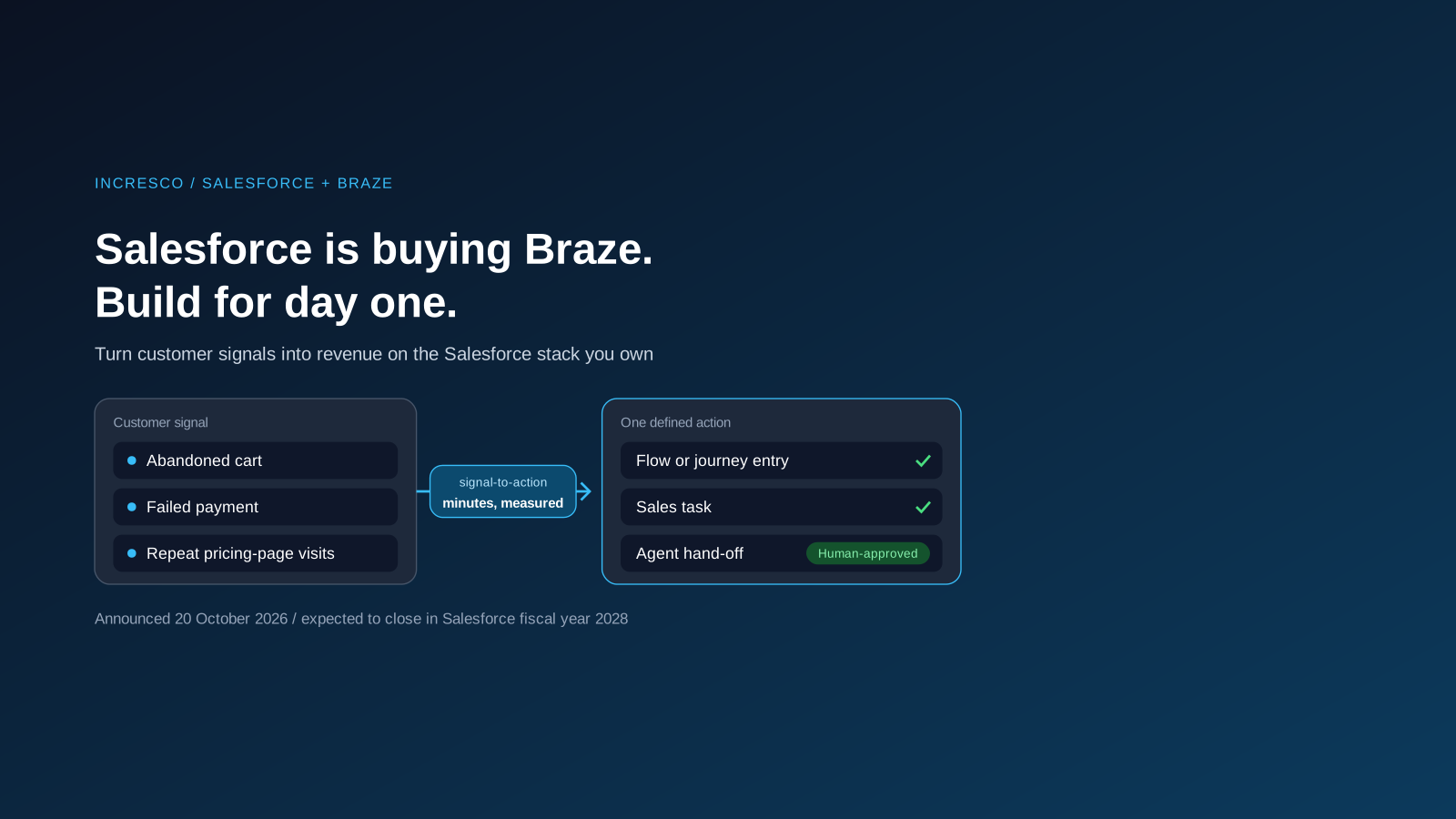
Salesforce announced on 20 October 2026 that it will acquire Braze for approximately $5.66 billion in enterprise value. The deal has not closed and the two products are not yet integrated, so the best preparation is to get your Salesforce foundations ready: unified customer data in Data 360, portable journey logic, real-time revenue triggers, shared message governance and human-approved AI agents.
Key takeaways
- The deal is expected to close during Salesforce’s fiscal year 2028 (February 2027 to January 2028), subject to Braze shareholder approval and regulatory clearance.
- Nothing needs to be configured for Braze today, but readiness work can start now.
- Start with the customer signal closest to revenue and measure your signal-to-action time.
- Keep journey logic separate from the delivery channel so it can move between engines.
- Name one owner for each customer data attribute, and publish it in a data ownership register.
Quick Explainer: What Is Braze, and Why Does This Deal Matter?
Braze is a customer engagement platform built on event streaming. It reacts to customer behaviour as it happens and coordinates messages across mobile apps, websites, email, SMS and WhatsApp. Salesforce says that after closing, Braze’s real-time engagement and AI decisioning are expected to complement Data 360, Customer 360 and Agentforce, and to strengthen cross-channel personalisation in Marketing Cloud.
In plain terms: Salesforce already holds the customer record. Braze is built to act on customer behaviour in the moment. Together they are meant to shorten the time between something a customer does and something your business does in response. That gap is what this guide helps you close.
Most commentary asks what the deal means for Salesforce. This guide asks a more useful question: what should you build now, on the Salesforce stack you already own, so that you capture revenue from this deal on day one?
To answer it, we reviewed what customers and analysts have said since the announcement, together with the latest survey data, and built each solution around a need the evidence supports.
What Did Salesforce Announce About Braze, and What Has Not Changed Yet?
Three facts shape every recommendation below:
- The deal has not closed. It is expected to close during Salesforce’s fiscal year 2028 (February 2027 to January 2028), subject to Braze shareholder approval and regulatory clearance.
- Integration has not started. Until closing, the two companies operate independently, so there is no integrated product to configure today.
- Braze is optimised for high-volume B2C engagement. B2B organisations should treat the principles here as a design pattern rather than a product plan.
The practical conclusion: the winners will not be those who wait for the integrated product. They will be those whose data, journeys and governance are ready to receive it.
What Do Salesforce Customers Need From Real-Time Engagement?
Before choosing what to build, we reviewed what Salesforce customers, Braze customers and analysts have said since the announcement, alongside the latest survey data. Six needs come up repeatedly.
| Customer need | What the evidence says | Source |
|---|---|---|
| Marketers need access to the data around the customer | Only 60% of marketers in India have complete access to service data, 61% to sales data and 58% to commerce data, and 71% struggle to respond promptly because they lack context | Salesforce State of Marketing, India findings |
| Customers expect a conversation | 92% of marketers say customers expect two-way conversations, and 91% say AI is raising customer expectations | Salesforce State of Marketing, India findings |
| Personalisation pays, and scaling it takes planning | McKinsey found personalisation most often lifts revenue by 10 to 15 percent (5 to 25 percent by company), and 76% of US consumers were frustrated without it (2021 survey). In Salesforce’s survey, 83% of marketers need more personalised content than they can produce and 98% hit barriers, mainly privacy rules, data quality and skills | McKinsey; Salesforce |
| Clarity on which engine does what | Salesforce already has four marketing execution engines, and Gartner forecasts it will retire one by 2029, forcing more than 30% of affected customers into unplanned replatforming (a forecast, not a roadmap). CIO’s analysts also flag overlap between Data 360 and Braze profiles, and between Journey Builder and Braze Canvas | MarTech; CIO |
| Flexibility and cost clarity | Gartner advises keeping at least one independent orchestration vendor in major renewals, and notes that a move from Braze’s engaged-profile and message-volume pricing to consumption credits shifts financial risk into runtime behaviour. Attendees at Braze’s customer event raised migration, data normalisation, deliverability and the learning curve | MarTech; Digiday |
| Humans accountable for what is sent | Braze’s CTO told Digiday that customers are responsible for what they send and that a human should press launch. Constellation Research points to the need to suppress outreach to a customer who has just complained | Digiday; CX Today |
Two caveats. Salesforce’s figures are vendor research: they are the India findings of its tenth State of Marketing survey (4,450 marketing decision makers worldwide, 250 in India, fielded October to November 2025). McKinsey’s consumer data dates from 2021 and covers the United States. Gartner’s retirement figure is a forecast reported by MarTech.
How to Decide What to Build First
Ask one question of every initiative: does it turn a customer signal into a revenue or retention action faster than we do today? If it does, it belongs on the roadmap. If it merely adds a channel, it can wait. The five solutions below are ordered by how quickly they pay back.
How to Unify Customer Data in Data 360 for Marketing Teams
Solution 1: the data ownership register
The best-supported need in the research is also the least glamorous. In Salesforce’s 2026 survey of marketers in India, only 60% had complete access to service data, 61% to sales data and 58% to commerce data, and 71% said they struggle to respond promptly because they cannot reach the context they need. Marketers satisfied with their data unification were 1.4 times more likely to respond to customers regularly and 1.6 times more likely to use AI agents. Analysts quoted by CIO add a Braze-specific point: Data 360 and Braze both hold customer profiles, so without one clear owner, profiles can drift and customers can receive conflicting messages.
What to build
- Unify CRM, commerce, service and marketing identities in Data 360 with identity resolution rules your business has agreed in writing.
- Open service, sales and commerce data to the marketing team through governed access rather than one-off exports.
- Name one system of record for each attribute, such as consent, lifecycle stage and last purchase.
- Publish a short data ownership register. When Braze arrives, that register decides which profile wins.
Data ownership register: starter template
| Attribute | System of record | Owner (role) | Update frequency | Used by |
|---|---|---|---|---|
| Consent and preferences | e.g. Data 360 / consent platform | Data protection lead | Real time | All journeys |
| Lifecycle stage | e.g. Salesforce CRM | Head of Sales Operations | Real time | Marketing, Sales |
| Last purchase | e.g. Commerce platform | Head of Digital | Real time | Win-back, upsell |
| Open service case status | e.g. Service Cloud | Head of Service | Real time | Suppression rules |
How to Keep Salesforce Journey Logic Portable Across Engines
Solution 2: journey portability
Salesforce already offers several ways to orchestrate journeys, and Braze adds another. Gartner told MarTech that Salesforce is likely to retire one of its four marketing execution engines by 2029, which would push more than 30% of affected customers into unplanned replatforming. That is a forecast, not a roadmap, but it is a good reason to avoid journey logic that only one engine can run. Braze customers raise the mirror concern: migration effort, data normalisation, email deliverability and the learning curve. Gartner advises keeping at least one independent orchestration option in major renewals.
What to build
- Write down which engine owns each journey today and why.
- Separate the journey definition (entry conditions, waits, exit goals and suppression rules) from the channel that delivers it, so a journey can move between engines without a rebuild.
- Keep a governed copy of customer data in your warehouse so another orchestration tool could run against it.
- Add pricing model, API stability and third-party connector support to your renewal checklist.
- Braze customers content with their current terms should ask whether to extend them before closing, as Gartner suggests.
How to Turn Customer Behaviour Into Real-Time Revenue Triggers
Solution 3: signal-to-action build steps
Many enterprises still move CRM data into a warehouse and then batch it into an engagement tool through reverse-ETL jobs. Those jobs add hours of delay, so by the time the message goes out, the customer may already have moved on. Getting this right is worth the effort: McKinsey found personalisation most often lifts revenue by 10 to 15 percent, and Salesforce’s survey shows 92% of marketers say customers now expect a real-time conversation rather than a broadcast.
Build steps
- List your ten highest-value behavioural signals, such as an abandoned cart, repeated pricing-page visits, a failed payment, first-week inactivity, repeat service contacts or a support contact after purchase.
- Stream those events into Data 360 using real-time mechanisms such as Platform Events and Change Data Capture where your architecture allows.
- Map each signal to one defined action: a Flow, a journey entry, a sales task or an agent hand-off.
- Measure the gap between the event and the action. That number is your baseline, and it is the metric the Braze integration is meant to improve.
- Start with the signal closest to money, then add the next one.
How to Build a Message Suppression and Priority Framework
Solution 4: consistent messages and two-way replies
Constellation Research’s Liz Miller describes the case every marketer recognises: one launch email for everyone, a different message for a loyal customer interested in a category, and nothing at all for someone who has just complained to service (CX Today). Without clear rules, the customer in an open case can still receive the promotion. Salesforce’s survey shows the other side of the same point: 92% of marketers say customers expect two-way conversations, yet 71% cannot respond promptly.
What to build
- Create a shared suppression and priority framework: service-critical first, then transactional, then promotional.
- Add case status, open opportunities and recent purchases as suppression conditions in every active journey.
- Route replies to the team or agent who can answer, with the full customer context attached, so a reply to a marketing message reaches service or sales rather than a no-reply inbox.
- Assign one owner for journey orchestration.
How to Govern Agentforce Agents With Approval Rules and Spend Limits
Solution 5: agents with human approval and cost controls
Gartner expects Braze’s real-time channels to give Agentforce agents an easier way to act, and also notes the cost angle: a shift from Braze’s predictable engaged-profile and message-volume pricing to consumption credits moves financial risk into runtime behaviour that marketing teams must actively govern (MarTech). Braze’s own CTO wants a human to press the launch button, because customers remain responsible for what they send (Digiday).
What to build
- Start with one bounded use case, for example a service agent that sees the customer’s recent behaviour and offers the right next step.
- Ground it only in Data 360.
- Define what it may offer, what needs human approval and when it must escalate.
- Set a spending limit and alert on every automated action so the team knows what each action costs and what it earns. Gartner calls this discipline Marketing FinOps.
- Track resolution rate, handling time and revenue from agent-led offers.
A 90-Day Salesforce Readiness Plan for the Braze Era
| Phase | Focus | Output |
|---|---|---|
| Days 1-30 | Data access and journey ownership | Identity rules, data ownership register, map of which engine runs which journey |
| Days 31-60 | First revenue triggers | Two or three live signal-to-action flows with measured response time |
| Days 61-90 | Message governance and agent pilot | Suppression framework, reply routing, one Agentforce pilot with approval rules and spend alerts |
How to Measure Whether It Is Working
- Data access: share of marketers with complete access to service, sales and commerce data (the India benchmark is 58 to 61%).
- Signal-to-action time: minutes from customer event to first response.
- Recovered revenue: value from abandoned-basket, win-back and upgrade triggers.
- Message conflict rate: complaints and unsubscribes per thousand sends.
- Reply time: time to a human or agent answer when a customer responds to a message.
- Automation cost: spend per automated action against the revenue it produces.
What to Watch Until Closing
Track the regulatory process, the Braze shareholder vote, and any Salesforce statements on pricing, packaging, API support and the product roadmap. Braze customers should ask Salesforce for pricing commitments in writing, and Salesforce customers should ask which marketing engine will receive investment. Avoid multi-year commitments that assume specific integrated features until Salesforce publishes them.
Want to see how this applies to your Salesforce setup? In a free 30-minute discovery call, we work through your own customer signals, data ownership and journeys, and you leave with live, usable solutions and clear next steps. See what happens on the call and book yours.
What We Have Already Built on Salesforce
This is Salesforce work we have delivered, described here without client names.
| Client context | What Incresco built on Salesforce | Outcome |
|---|---|---|
| Research and education organisation: building a unified engagement foundation | A single engagement platform around Salesforce, with an integration hub and real-time sync through Platform Events and Change Data Capture | One live view of users and engagement, updated automatically in real time with no manual intervention |
| Luxury hospitality brand: extending its signature concierge experience digitally | A conversational AI assistant for discovery, personalisation and booking, with every interaction syncing to Salesforce in real time | Concierge-quality service at any hour: the agent does the groundwork and the sales team closes |
Explore more: Salesforce consulting · Data 360 services · Agentforce and AI agents · Our work
Frequently Asked Questions
Has Salesforce Completed the Braze Acquisition?
No. The agreement was announced on 20 October 2026 but has not closed. It is expected to close during Salesforce’s fiscal year 2028 (February 2027 to January 2028), subject to Braze shareholder approval and regulatory clearance. Until then, the two companies operate independently.
What Does the Salesforce Braze Acquisition Mean for Salesforce Customers?
Salesforce says Braze’s real-time engagement and AI decisioning are expected to complement Data 360, Customer 360, Agentforce and Marketing Cloud after closing. There is no integrated product to configure yet, so the most useful step now is preparing your data, journeys and governance.
Should Salesforce Customers Wait for Braze Before Investing in Real-Time Engagement?
No. Unified data, clear journey ownership, signal-to-action flows and message governance deliver value on the stack you own today, and they make any future integration easier to adopt.
What Is a Data Ownership Register?
A short document that names one system of record and one accountable owner for each customer attribute, such as consent, lifecycle stage and last purchase. It decides which profile wins when two systems hold different values.
What Is Journey Portability?
Designing journeys so the definition (entry conditions, waits, exit goals, suppression rules) is separate from the delivery channel. A portable journey can move between orchestration engines without being rebuilt.
What Is Signal-to-Action Time?
The minutes between a customer event, such as an abandoned cart or failed payment, and your first response. It is the baseline metric for real-time engagement and the number a Braze integration is meant to improve.
Does This Apply to B2B Companies?
Braze is optimised for high-volume B2C engagement, so B2B teams should treat these principles as a design pattern rather than a product plan. Data ownership, portable journeys and fast signal-to-action flows apply to both.
How Should AI Agents Be Governed in Customer Engagement?
Start with one bounded use case grounded in Data 360. Define what the agent may offer, what needs human approval and when it escalates, and set spending limits and alerts on every automated action.
How Do I Avoid Platform Lock-In While the Roadmap Is Unclear?
Keep journey logic separate from channels, keep a governed copy of customer data in your warehouse, and add pricing model, API stability and connector support to your renewal checklist.
What Happens on a Free 30-Minute Discovery Call With Incresco?
We start with your business, not our services. A Salesforce architect walks through your customer signals, data ownership and journeys with you, then works on solutions live during the call. You leave with concrete next steps you can use whether or not we work together.
Talk to Incresco
Incresco is an AI-first consulting and product engineering company with engineering hubs in Bengaluru and Coimbatore, serving clients across the UK, Europe, the US and India. We are a Claude partner, and we build agents that act inside your business, grounded in your Salesforce data.
Your Free 30-Minute Discovery Call: A Working Session Built Around Your Business
We believe trust is earned by solving, not by presenting. So our discovery call is a working session, and you start getting value before it ends.
| Step | What happens | What you get |
|---|---|---|
| 1. We listen first (about 5 minutes) | We learn your business, your customers and the revenue outcomes you care about most, and how Salesforce fits into them today | A shared picture of your goals, in your words |
| 2. We walk through your setup together (about 10 minutes) | A Salesforce architect maps your customer signals, who owns which data, and where your journeys run, using the ideas in this guide | A clear view of where the fastest wins sit |
| 3. We solve live (about 10 minutes) | We work through your highest-value signal on the call: sketching the signal-to-action flow, the data ownership choices and the guardrails for it | A working solution outline you can act on right away |
| 4. We agree the way forward (about 5 minutes) | We recommend what to do first, in what order, and what a sensible 90-day path looks like, with a clear owner for each step | A concrete plan, yours to keep, with no obligation |
Who joins you: a Salesforce architect and a business-minded solutions lead, so you get both the technical answer and the commercial reasoning.
What to bring (optional): a rough list of your top customer signals, the Salesforce clouds you use today, and one revenue or retention goal. If you have nothing prepared, we will start from scratch together.
Book Your Free 30-Minute Discovery Call
Prefer email? Write to contact@increscotech.com or visit www.increscotech.com.
About the author: Karthikeyan S is a Growth Marketing Associate at Incresco, where he works on AI-led solutions and brings agentic solutions to enterprises across applications, Salesforce and WhatsApp.
Sources
- Salesforce, Salesforce Signs Definitive Agreement to Acquire Braze, announced 20 October 2026 (India newsroom edition dated 27 October 2026).
- CIO, Salesforce to buy Braze for $5.7 billion to boost real-time customer engagement, 22 October 2026.
- MarTech, Braze gives Salesforce more speed and more overlap, 27 October 2026.
- Digiday, Salesforce’s $5.7 billion Braze deal puts marketers at an ecosystem crossroads, 26 October 2026.
- CX Today, Has Salesforce Bought Its Missing Engagement Engine?, 21 October 2026.
- Salesforce, State of Marketing, tenth edition, India findings, July 2026.
- McKinsey, The value of getting personalization right or wrong is multiplying, 2021.
This article reflects publicly announced information as of 28 October 2026. The transaction remains subject to closing conditions, and descriptions of future capabilities are expectations stated by the companies, not delivered products.
Related Articles
Engineering
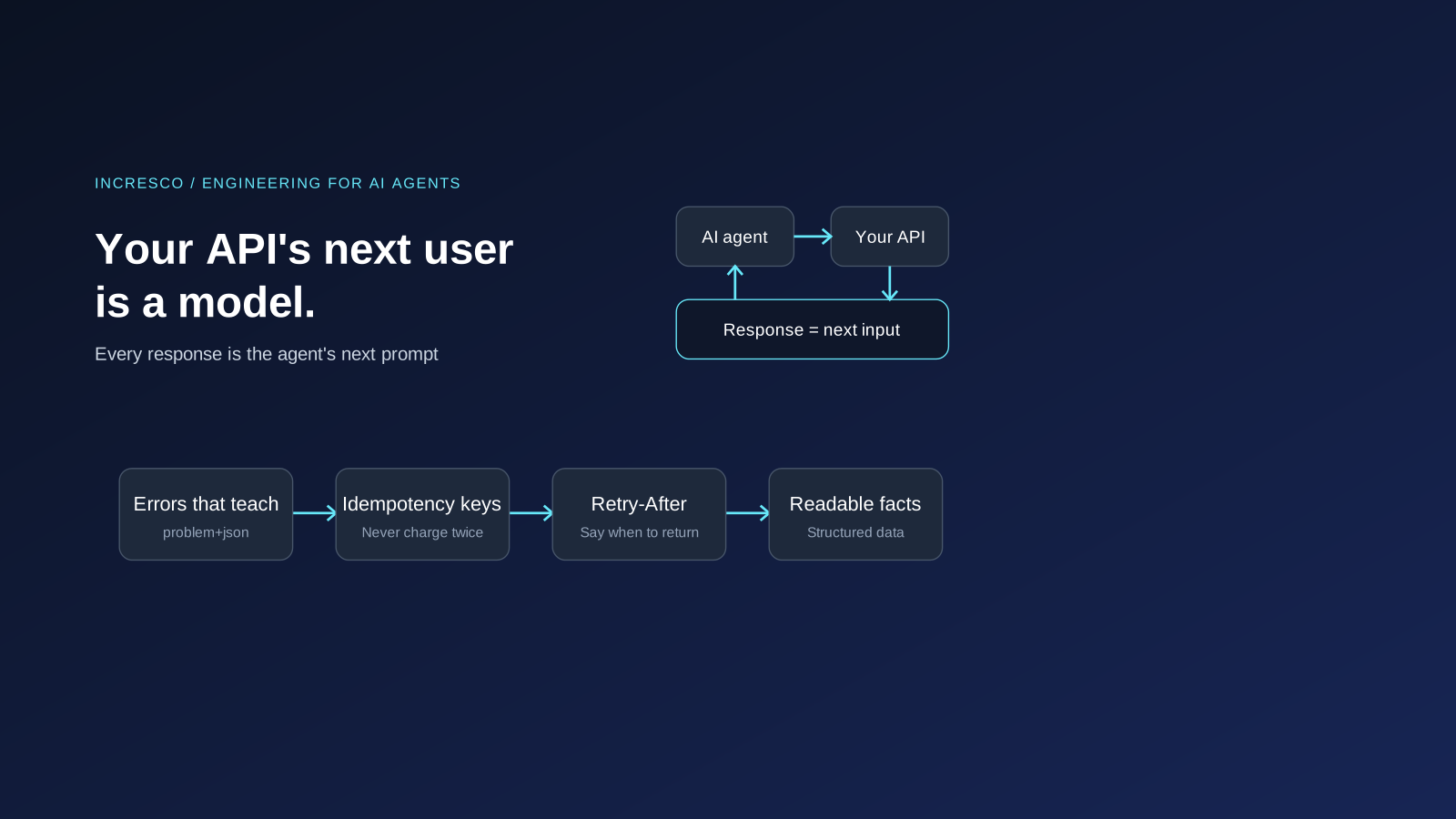
Your API's Next User Is a Model: Agent Experience (AX) for Engineers
AI agents call your API and treat each response as their next prompt. Engineering for them: clear errors, idempotency keys, rate limits and MCP tools.
Read Insight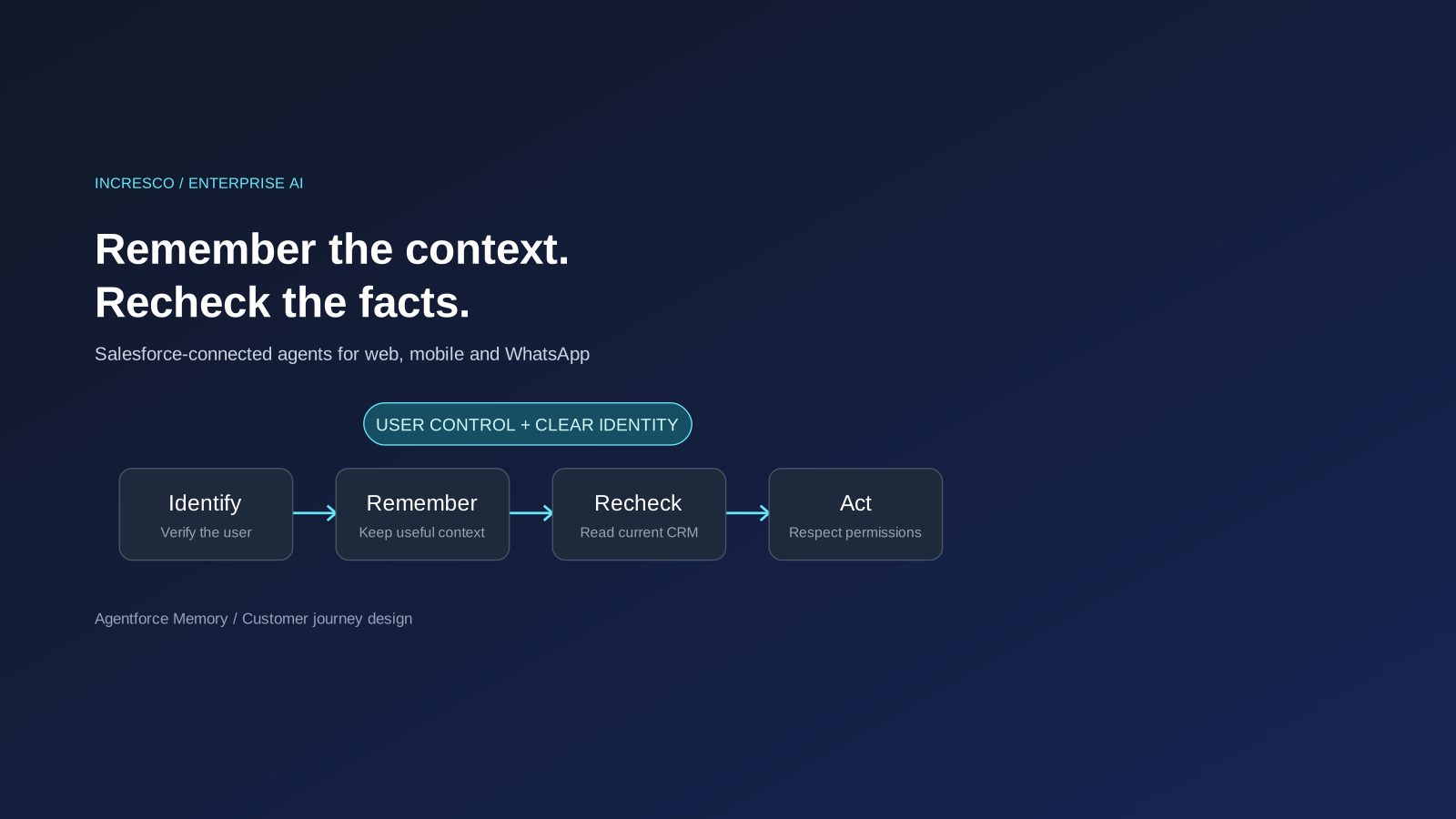
Business
Agentforce Memory: What Salesforce and WhatsApp AI Agents Should Remember
Salesforce's new Agentforce Memory engineering article explains persistent context. What should web, mobile and WhatsApp AI agents remember, refresh or forget?
Read Insight