Blog Article
What Does an AI Agent Cost to Build and Run? The Cost Drivers Every Buyer Should Know
Before you ask for a quote for an AI agent, know what moves the price: scope, integrations, data, testing and running costs. Here is how model usage is billed and the questions to ask any builder.

“How much does an AI agent cost?” is one of the first questions a business asks, and the honest answer is: it depends on a few things you can name before anyone writes a line of code. A quote that skips them is a guess.
This post lists those cost drivers, explains how the model usage part is billed, and gives you questions to ask any team that offers to build an agent for you. We do not quote prices here. We show you what to look at.
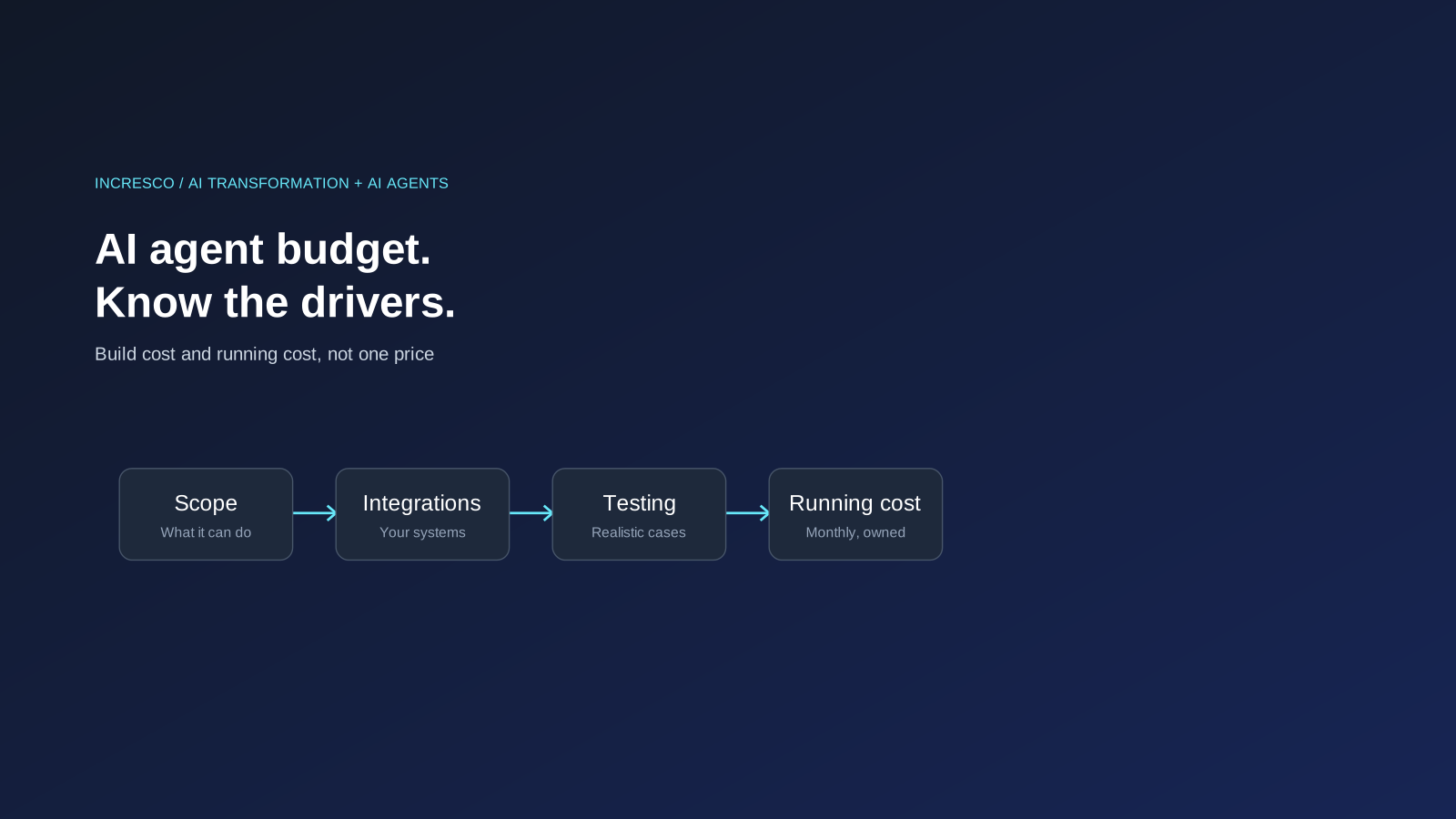
Two Costs, Not One
An AI agent has a cost to build and a cost to run. Buyers often ask only about the first.
- Building covers design, the connections to your systems, the instructions and tools the agent uses, and testing.
- Running covers model usage, hosting, monitoring, and the time someone spends improving the agent after launch.
Both continue after launch. A budget that covers only the build leaves ongoing costs unbudgeted.
What Drives the Build Cost?
- Scope. An agent that answers questions from a policy document is a smaller job than one that updates your CRM, books appointments and sends payments. Each action it can take adds design, rules and testing.
- Integrations. The agent has to reach your systems: CRM, helpdesk, calendar, inventory, email, WhatsApp. Every connection means access, security review and handling of failures. Old systems with poor interfaces cost more to connect.
- Data quality. An agent is only as good as what it can read. If your answers are scattered across inboxes and old files, the cleanup is part of the project.
- Rules and escalation. Decide what the agent may do alone, what needs a person to approve, and when it hands over. These rules take real design time.
- Testing. An agent can give a different answer to the same question. Good teams test with realistic cases, including awkward ones, before launch.
- Languages and channels. Each channel, such as web chat, WhatsApp or email, and each language adds testing.
What Drives the Running Cost?
Anthropic’s pricing documentation shows how model usage is billed for Claude models. It is one example of how usage-based pricing works.
- Usage is measured in tokens. Prices are listed per million tokens (MTok). A token is a small piece of text.
- Input and output are priced separately. The pricing table lists a different price for input tokens and for output tokens, so a long question and a long answer are not billed the same way.
- Prompt caching has its own prices. The table has separate columns for cache writes and cache hits. Anthropic’s page lists cache hits at a lower price than base input.
- Models differ in price. The same table lists different prices for different Claude models, so the model you pick changes the bill.
- Tokenizers can change the count. Anthropic notes that Claude 4.7 and later models use a newer tokenizer that produces approximately 30% more tokens for the same text, depending on the content and workload.
Prices change, so check the provider’s current page before you plan. The lesson that lasts: usage cost depends on how much text the agent reads and writes, how often, and with which model. That makes the design of the agent a cost decision.
Other running costs are hosting, monitoring, and the people who review the agent’s work and fix what it gets wrong.
Questions to Ask Any Team That Quotes You
- What exactly can the agent do, and what can it not do?
- Which of our systems does it connect to, and who gives access?
- What does it cost per month to run at our expected volume, and how did you estimate that?
- How do you test it, and what happens when it answers wrongly?
- Who reviews its work after launch, and how often?
- What would change the price? Which choices raise it and which lower it?
- Who owns the instructions, the data and the code if we change builders?
The Rule to Adopt
Never approve an AI agent budget that lists only a build price: every plan needs a named owner, an estimated monthly running cost, and a limit that triggers a review.
How Incresco Helps
Incresco is a Claude partner. We build web and mobile applications, cloud systems, Salesforce solutions, WhatsApp experiences and AI agents. For businesses planning a first agent, we help define the scope, the connections and the running budget before building starts. See our AI transformation, AI strategy and system integrations services.
Planning an AI agent and want to know what drives the cost for your case? Contact Incresco and ask for an AI agent scoping review. We will go through what the agent should do, which systems it touches and how it will run, and give you the list of cost drivers to budget for.
Related Articles
Engineering
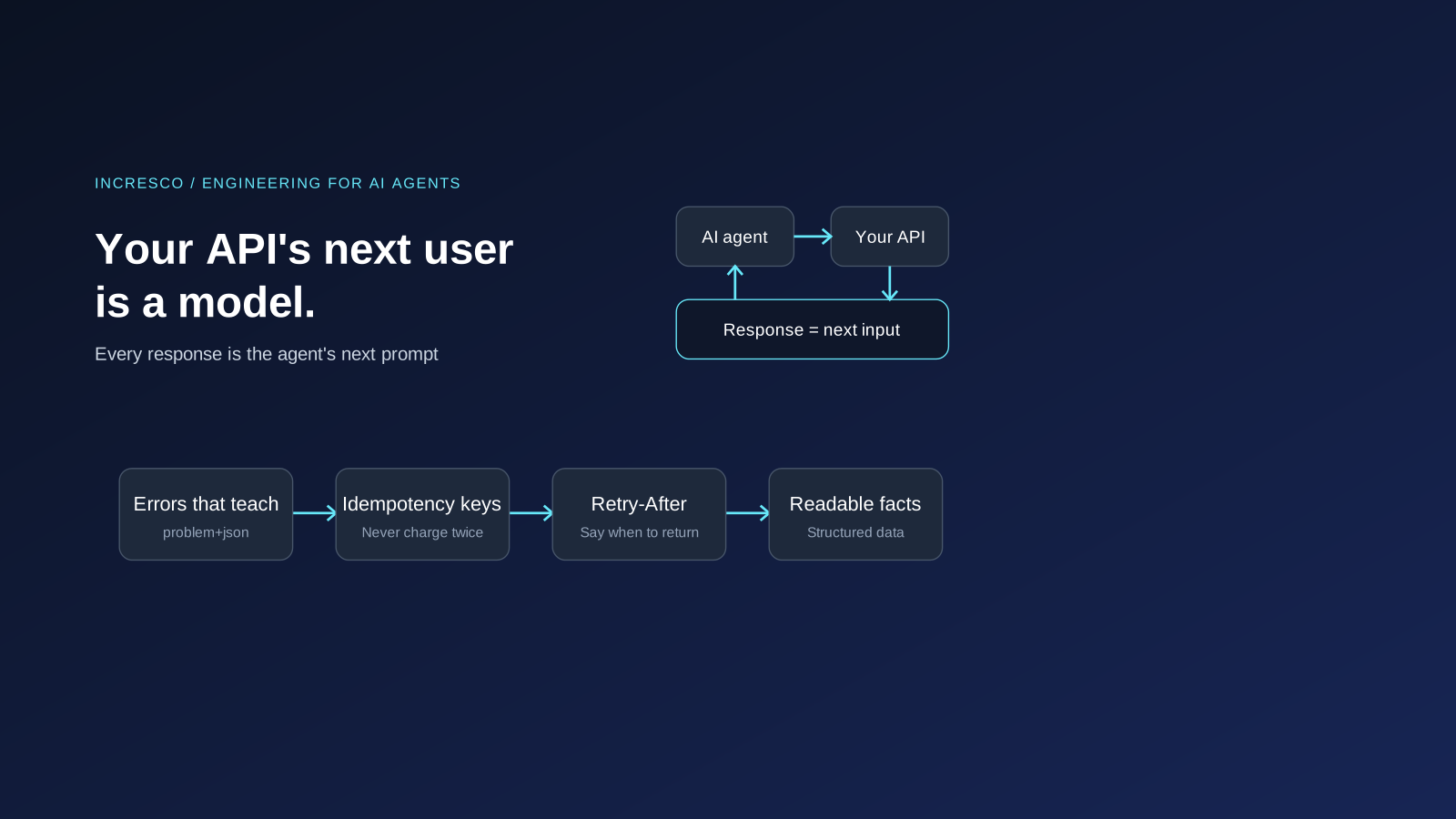
Your API's Next User Is a Model: Agent Experience (AX) for Engineers
AI agents call your API and treat each response as their next prompt. Engineering for them: clear errors, idempotency keys, rate limits and MCP tools.
Read Insight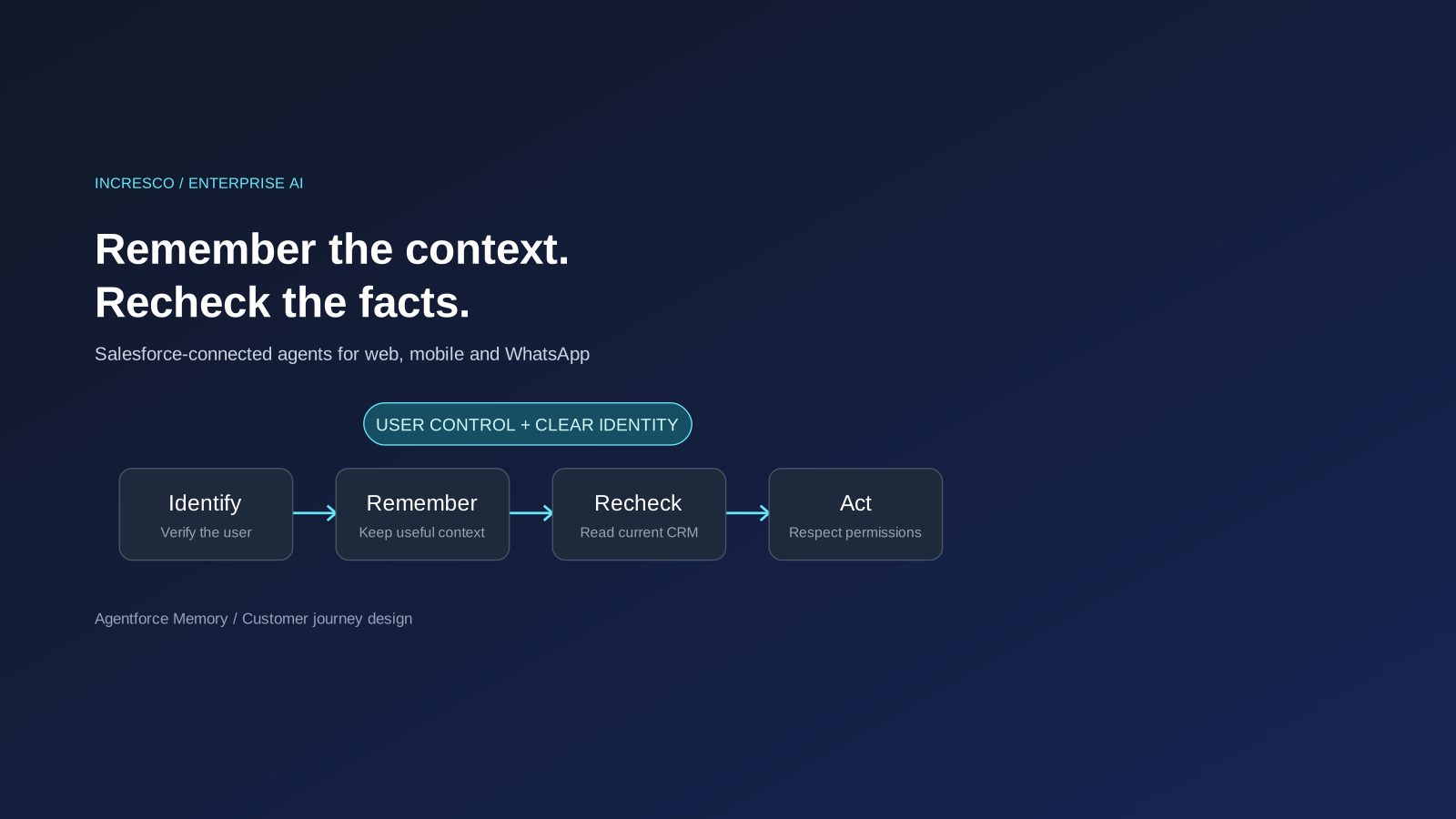
Business
Agentforce Memory: What Salesforce and WhatsApp AI Agents Should Remember
Salesforce's new Agentforce Memory engineering article explains persistent context. What should web, mobile and WhatsApp AI agents remember, refresh or forget?
Read Insight