Blog Article
CodeAssure POC: Evaluating AI-Powered Pull Request Review Automation
An internal proof-of-concept evaluating CodeAssure — an open-source AI reviewer — for automating pull request reviews. What the POC validated, what it didn't, and the trade-offs between local and cloud-hosted models.

1. Background
In modern software development, code reviews are essential for maintaining quality, catching defects early, and enforcing consistency. However, manual reviews often become a bottleneck as teams scale.
This document describes a Proof of Concept (POC) evaluating CodeAssure, an open-source AI tool that automates and enhances pull request reviews.
POC Scope: This evaluation was conducted using a local model via Ollama. Findings about workflow integration and tooling behavior are validated results. Conclusions about review quality with production-grade models (Claude, GPT-4o) are projections based on known model capability differences — not results from this evaluation. A follow-on test with a cloud API is recommended before making adoption decisions.
2. What is CodeAssure?
CodeAssure is an AI-powered reviewer that integrates directly into the pull request workflow. It can:
- Analyze code changes and provide inline feedback
- Generate structured PR summaries and titles
- Suggest actionable improvements and code patches
3. Key Benefits of AI-Assisted Reviews
3.1 Faster Feedback Loops
Developers receive near-instant feedback, reducing dependency on reviewer availability and timezone constraints.
3.2 Continuous Review
Each new commit triggers incremental re-analysis, ensuring feedback stays current throughout the PR lifecycle.
3.3 Natural-Language Reasoning About Intent
Rule-based linters flag violations of known patterns. Many modern static analyzers (semantic analysis, dataflow tools) are also context-aware at a structural level. What AI models add is natural-language reasoning about intent — evaluating whether naming is clear, whether logic matches what the surrounding code implies it should do, and flagging things that are technically valid but conceptually off.
4. Model Flexibility
CodeAssure supports a wide range of AI providers, giving teams control over performance, cost, and data-residency requirements:
| Provider | Notes |
|---|---|
| Anthropic Claude | Strong contextual understanding; well-suited for complex or nuanced changes |
| OpenAI GPT-4 / GPT-4o | High-quality reasoning and structured outputs |
| Google Gemini | Competitive quality; natural fit for Google-ecosystem teams |
| Azure OpenAI | Enterprise-grade OpenAI access with regional data controls |
| AWS Bedrock | Managed model hosting; integrates with AWS-native infrastructure |
| Local models (Ollama / LiteLLM) | No external API dependency; lower cost; output quality varies significantly with model size |
Table 1: Supported AI providers and key characteristics
5. POC Scope & Honest Assessment
This evaluation specifically tested CodeAssure with a local model running through Ollama. This was a deliberate starting point: assess workflow integration and tooling behavior without incurring API costs before committing to a cloud provider.
5.1 What This POC Validated
- CodeAssure integrates cleanly into a GitHub Actions workflow
- Automated review comments trigger correctly on PR open and commit push events
- Incremental re-analysis on new commits works as expected
- PR title and summary generation was consistently useful even at this model tier
5.2 What This POC Did Not Validate
- Review depth and accuracy with production-grade models (Claude Sonnet, GPT-4o, etc.)
- Cost-effectiveness at team scale
- False-positive rate or suggestion acceptance rate under real workloads
5.3 Honest Takeaway
The integration and workflow story is confirmed. The quality and ROI story depends on the model, and that hypothesis was not tested here. The conclusion that CodeAssure has strong potential as a first-pass reviewer is reasonable based on known model capabilities, but should be treated as a starting hypothesis for a follow-on evaluation — not a finding from this POC.
6. PR & Merge Workflow
With CodeAssure integrated, the pull request workflow proceeds through four key stages:
- Trigger — PR is opened; CodeAssure is triggered automatically
- Deep Review — Inline comments and suggested fixes are added to the PR
- Iteration — Each subsequent commit triggers incremental re-analysis
- Approval & Merge — Developers address or dismiss suggestions and merge with confidence
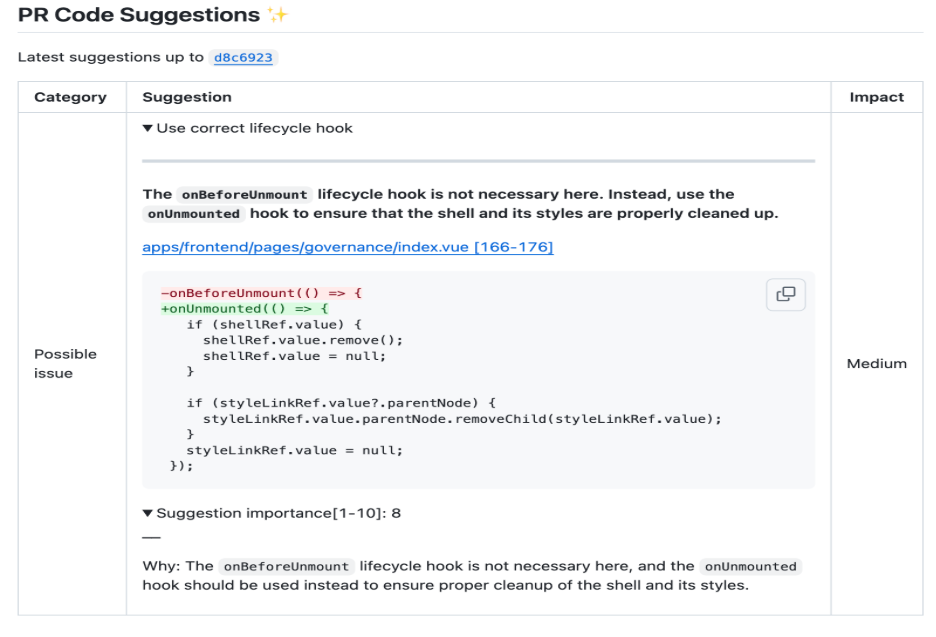
Figure 1: System Design — CodeAssure with GitHub Actions workflow
7. Deployment Options
7.1 Option 1: GitHub Actions (Recommended Starting Point)
The GitHub Actions deployment is the recommended starting point for most teams. Key characteristics:
- No infrastructure to maintain — runs on GitHub-managed compute runners
- Triggered automatically on PR events
- You are responsible for: the workflow YAML, API keys (stored as GitHub Secrets), and model configuration in the CodeAssure config file
Clarification: GitHub manages the runner. CodeAssure itself, your AI provider credentials, and workflow configuration remain your responsibility. “No infrastructure” means no servers to run or maintain — it does not mean zero configuration.
GitHub Actions Flow
- PR opened
- GitHub Actions triggered (GitHub-managed runner)
- CodeAssure executes (your YAML + your config)
- Calls AI API using your credentials
- Posts inline comments on PR
7.2 Option 2: Self-Hosted (Advanced / Enterprise)
The self-hosted option provides full control over the runtime environment and data residency. It is suitable for organizations with strict security, compliance, or air-gap requirements.
CodeAssure runs as a FastAPI webhook server; incoming events require HMAC signature validation and a Git provider token (PAT or GitHub App) to authenticate comment posting.
Infrastructure note: This is a persistent, always-on service. Incoming GitHub webhook events are HMAC-validated before processing. A properly scoped credential is required to write back to the PR.
Self-Hosted Flow
- PR opened
- GitHub sends webhook (HMAC-signed)
- Hosted CodeAssure server (FastAPI) receives event
- Validates webhook secret
- Authenticates with Git provider token
- Calls AI API
- Posts inline comments on PR
Infrastructure options: AWS (EC2 / ECS / Lambda + API Gateway), Render, or any container-capable platform.
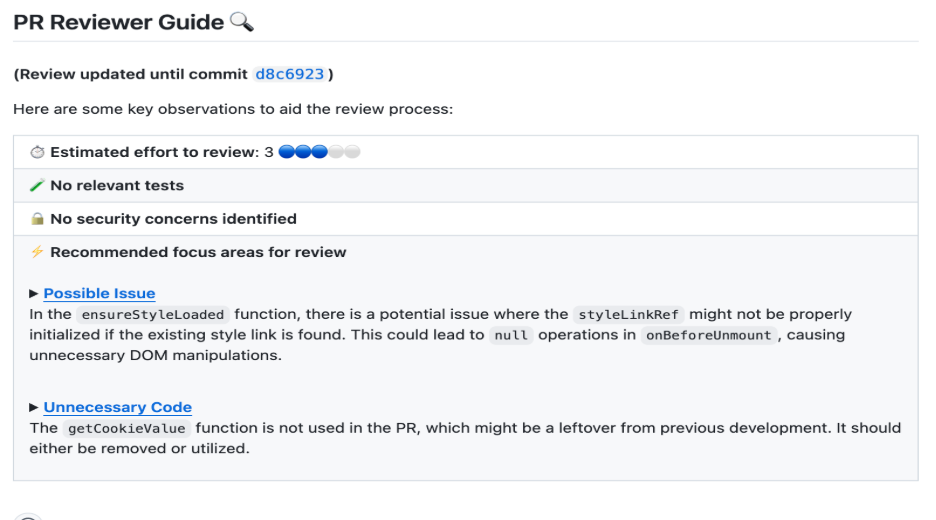
Figure 2: System Design — CodeAssure Deployment Options (GitHub Actions vs. Self-Hosted)
8. POC Insights & Trade-offs
8.1 What Worked Well
- Integration setup was straightforward; the GitHub Actions workflow was operational within a few hours
- PR summary and title generation were consistently useful, even under local model constraints
- Incremental feedback on commits improved iteration speed during testing
8.2 Challenges Observed
- The local model (Ollama) produced generic or surface-level suggestions on non-trivial code
- Limited ability to reason about business logic or project-specific patterns
- Some suggestions required significant developer judgment before acting on them
8.3 Limitations & Trade-offs
| Factor | Notes |
|---|---|
| Human validation still required | AI suggestions should be reviewed before acting; false positives occur regardless of model |
| Quality is model-dependent | The gap between a small local model and Claude Sonnet / GPT-4o is substantial |
| API costs (cloud models) | Not measured in this POC. Rough industry estimates: ~$0.01–$0.05 per PR with Claude Sonnet or GPT-4o, depending on diff size |
| Latency | Not formally measured. Typical range with cloud APIs: 15–45 seconds per review; longer for large diffs |
| Suggestion acceptance rate | Not tracked in this POC — capturing this in a follow-on evaluation would be the single most valuable data point for the business case |
Table 2: Limitations and trade-offs observed during the POC
9. CodeAssure in Action
The following screenshots illustrate CodeAssure’s output during the POC evaluation, including inline code suggestions and the reviewer guide that helps human reviewers focus their attention.
9.1 PR Code Suggestions
CodeAssure produces structured, categorized code suggestions with context-aware reasoning. Each suggestion includes:
- Category classification (e.g., Possible Issue, Best Practice, Enhancement)
- A specific code patch showing the recommended change
- An importance score from 1–10 with rationale
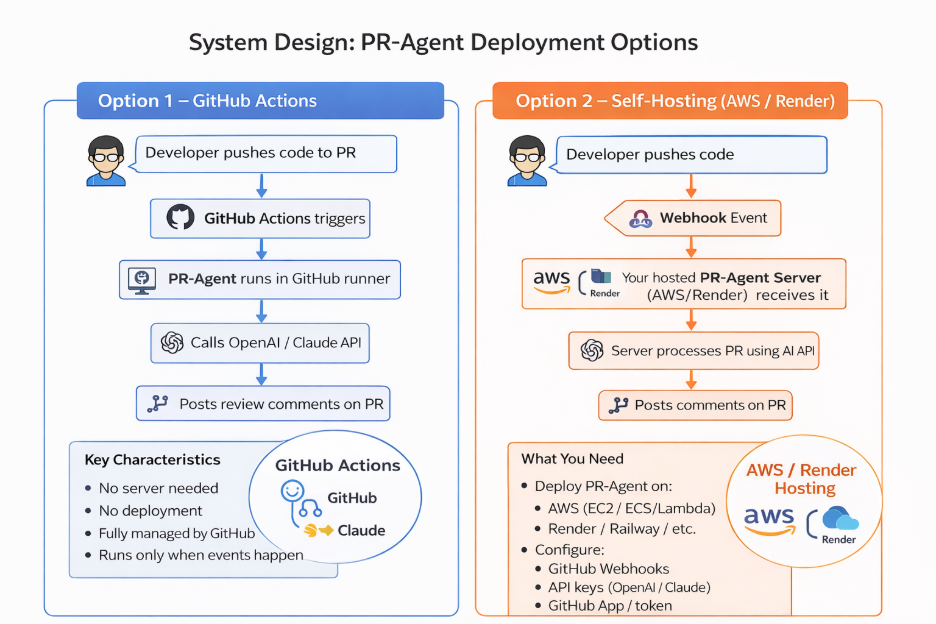
Figure 3: PR Code Suggestions — Example showing lifecycle hook correction with diff view and importance score
9.2 PR Reviewer Guide
The PR Reviewer Guide provides a structured summary to help human reviewers quickly orient themselves. It includes:
- Estimated review effort (1–5 scale)
- Security and test coverage flags
- Key observations broken down by category (Possible Issues, Unnecessary Code, etc.)
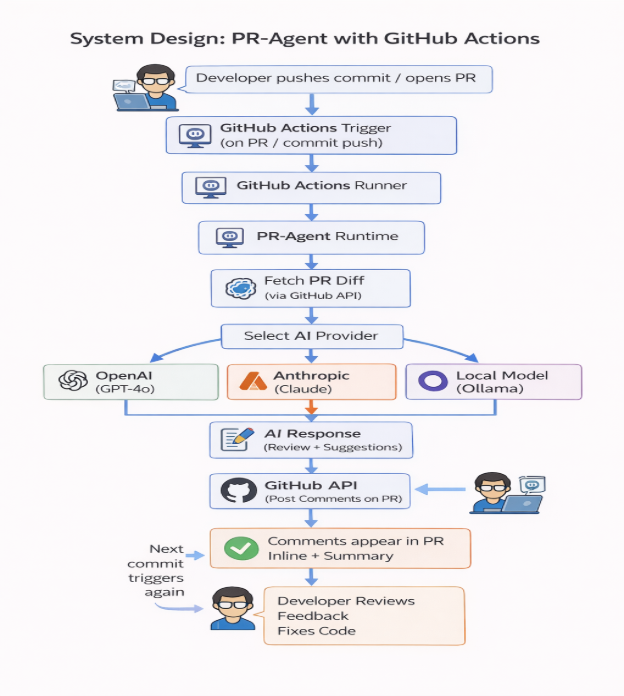
Figure 4: PR Reviewer Guide — Key observations, estimated review effort, and focus areas
10. Where CodeAssure Adds Value
- First-pass review before human reviewers engage, filtering routine issues
- Standardized PR descriptions — consistent summaries regardless of who opens the PR
- Reduced reviewer load for boilerplate and mechanical changes
- Faster feedback cycles on after-hours or cross-timezone commits
11. Recommended Next Steps
Run a two-week trial using Claude Sonnet or GPT-4o on real PRs in a non-critical repo. Track the following metrics to build a concrete business case:
- Suggestion acceptance rate — how often developers act on AI comments
- Time-to-merge compared to baseline
- Qualitative reviewer feedback on comment usefulness
That data would convert this POC from a workflow proof into a concrete business case.
12. Conclusion
This POC confirms that CodeAssure integrates cleanly into a standard GitHub-based workflow and provides useful automation at the local-model tier — particularly for PR summaries and incremental feedback.
The stronger claim — that it can meaningfully reduce review bottlenecks and improve code quality — is plausible and well-supported by what production models can do, but was not directly validated here.
| Dimension | Outcome |
|---|---|
| Workflow integration | ✅ Validated — GitHub Actions setup operational within hours |
| PR summaries & titles | ✅ Validated — Consistently useful even with local model |
| Incremental re-analysis | ✅ Validated — Works as expected on commit push |
| Review quality (cloud models) | ⚠️ Projected — Not tested; recommend follow-on evaluation |
| Cost & ROI at scale | ⚠️ Projected — Acceptance rate data needed for business case |
Table 3: POC findings summary — Validated results vs. projections
The right framing: this POC validated the plumbing. The quality case needs one more test with a production-grade model on real PRs.
Related Articles

Engineering & Tools
Animating the Web with Lottie: Best Practices for Optimization
The article suggests using the useEffect hook to control animation rendering, the useMemo hook to optimize rendering, and the useLazyLottie hook to lazy-load animati...
Read Insight
AI Strategy
Creating a simple Chatbot in Salesforce lightning using API.AI in less than 60 mins
In this article, I have explained on how to build your own Chatbot in API.AI and use it in Salesforce lightning.
Read Insight